A burgeoning standoff between students and the legal establishment has seen Chief Justice of India Surya Kant thrust into the center of a convocation controversy at the National Academy of Legal Studies and Research (NALSAR). Tensions flared when the student body pushed back against the administration’s decision to invite the top judge as their commencement speaker. As public pressure mounted, Justice Surya Kant clarified his position, stating unequivocally that he had never formally accepted the invitation to the NALSAR ceremony, effectively putting an end to speculation regarding his attendance.
The Standoff Facing Surya Kant
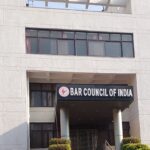
The situation escalated significantly when the Bar Council of India (BCI) intervened, with its chairman issuing a provocative warning that no NALSAR graduate would be enrolled as an advocate if the student protest continued. This move drew sharp backlash from legal collectives, who characterized the BCI’s stance as an overreach of authority that mirrored partisan political rhetoric. Critics condemned the leadership’s approach as heavy-handed, demanding the resignation of the chairman for his aggressive posture against the students.
Beyond the NALSAR friction, the broader legal landscape has remained volatile. In related developments, the Supreme Court recently declined to grant an urgent hearing regarding a petition filed against police actions involving protesting students, with the bench signaling a firm disinclination to intervene in the matter. Despite these tensions, the Chief Justice has continued his formal duties elsewhere, recently addressing graduates at the Gujarat National Law University (GNLU) where he emphasized the enduring relevance of speaking truth and practicing righteousness.
As the dust begins to settle on the convocation row, internal management at the National Law School of India University (NLSIU) is attempting to foster dialogue, with its Vice-Chancellor reaching out to a five-member student delegation. The events of 2026 highlight the growing friction between traditional judicial institutions and a new generation of law graduates. While the specific controversy surrounding the NALSAR event has been neutralized by the Chief Justice’s clarification, the underlying grievances regarding academic autonomy and the role of regulatory bodies remain a point of intense national debate.