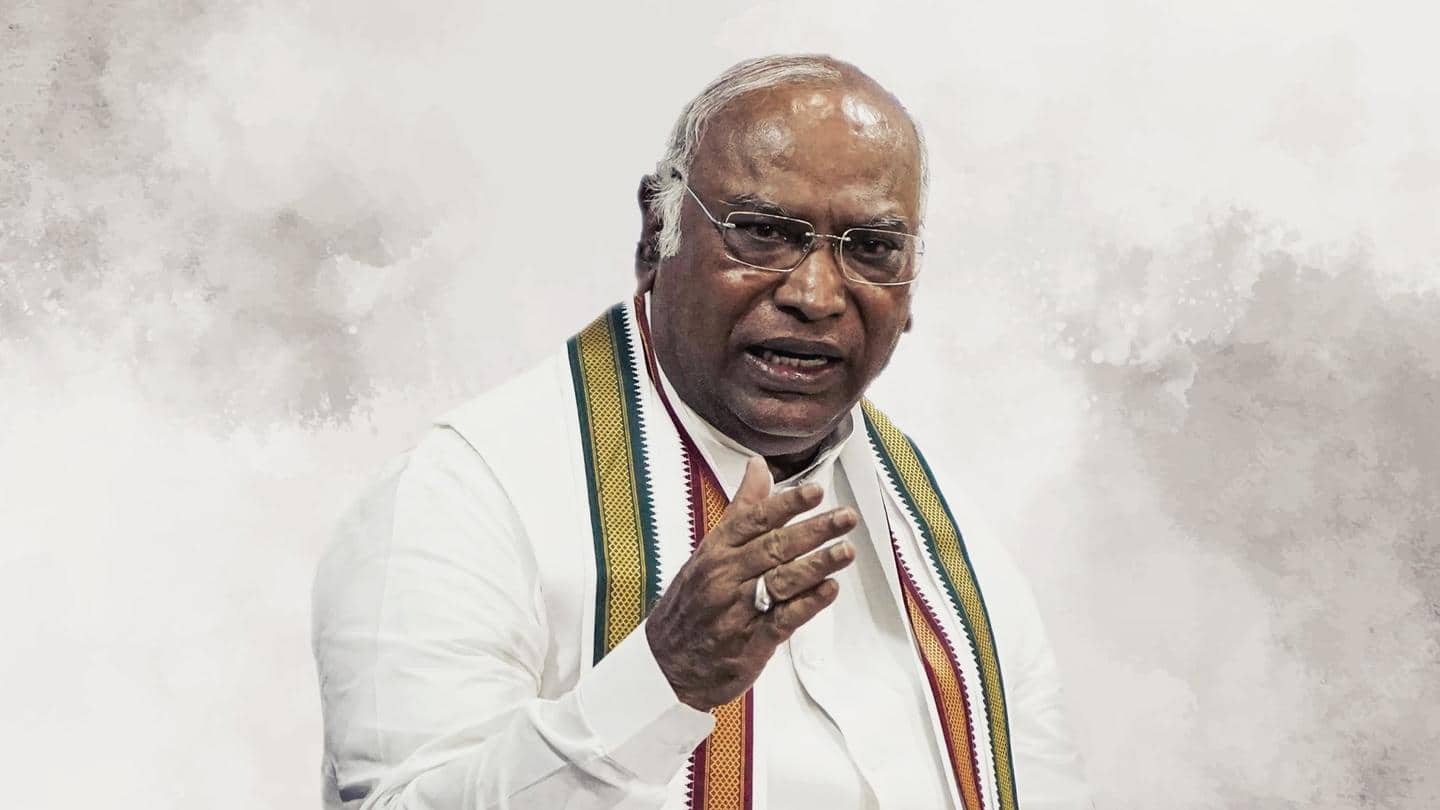
Congress President Mallikarjun Kharge recently expressed deep personal disappointment regarding the lack of vocal opposition from Congress Working Committee (CWC) members concerning a controversial “purification” ritual. The incident, which has sparked significant political backlash, centers on an event where the space he occupied was subjected to a cleansing ceremony, an act critics have denounced as a blatant display of caste-based prejudice. Kharge highlighted that the silence from within his own party ranks on this sensitive matter left him feeling wounded, emphasizing the need for a stronger, more principled stance against such exclusionary practices.
The moral burden of Mallikarjun Kharge
The incident ignited a broader firestorm in the political arena, with the Congress party shifting its focus to target the BJP, labeling the ruling party as “anti-Dalit.” The controversy reached a boiling point when legislative proceedings were brought to a standstill for two consecutive days. Opposition lawmakers vehemently blocked a proposed resolution regarding the cleansing ritual, leading to significant disruptions in the House. This parliamentary stalemate underscored the deep-seated ideological divisions that continue to complicate national discourse on social justice and caste hierarchy in modern India.
Beyond the immediate fallout of the ritual, the Delhi Congress has been aggressively shifting gears toward grassroots mobilization. Party officials confirmed that 13,031 booth-level agents have been deployed to oversee the Systematic Voters’ Education and Electoral Participation program. This massive administrative push is aimed at safeguarding the integrity of the electoral roll, ensuring that no eligible voter is wrongfully purged from the list ahead of upcoming civic challenges. The focus remains on maintaining transparency and inclusivity at the most granular level of the democratic process.
These events arrive amid a charged atmosphere where cultural policing is increasingly under the spotlight. Recent reports of tourists being physically assaulted at a Pune fort for wearing shorts serve as a grim reminder of the tensions surrounding traditionalism. Simultaneously, legal bodies are grappling with professional conduct, as seen in the ongoing defense of NALSAR students following a high-profile disciplinary standoff. As these disparate issues intersect, the ongoing discourse surrounding figures like Mallikarjun Kharge reflects a country struggling to reconcile its historical social structures with contemporary demands for dignity and equality.