Ladakh Unrest: From Climate Crusader to Controversial Agitator
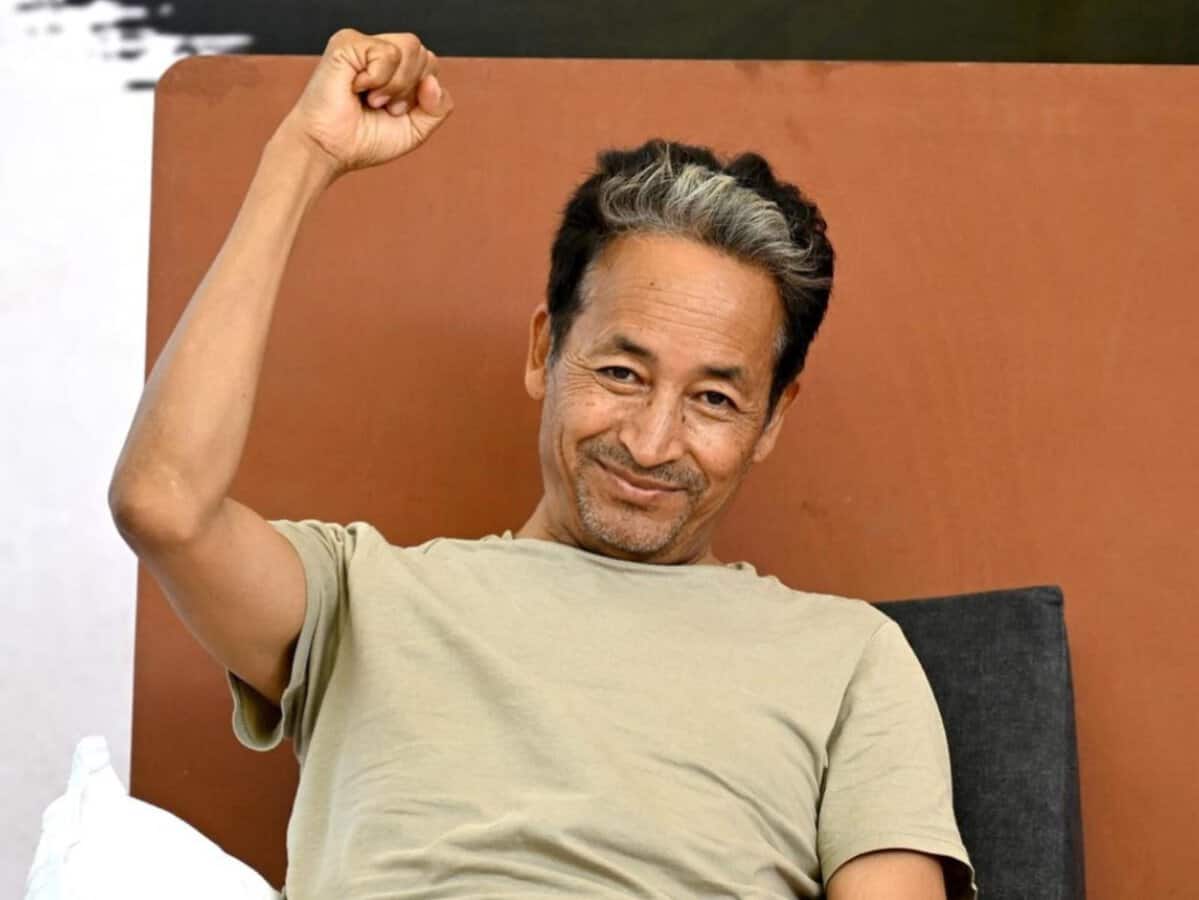
Ladakh, often hailed as India’s “Crown Jewel” for its monasteries, glaciers, and strategic significance, has recently witnessed turmoil that has shattered its image of peace. Streets once adorned with prayer flags and silence were instead filled with violence, fire, and fear. At the centre of this turbulence is Sonam Wangchuk—an innovator once celebrated globally for his environmental activism, now under arrest and accused of fueling unrest.
Violence in Leh
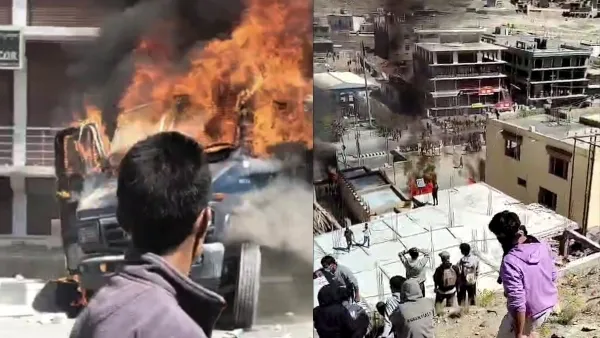
On 24 September, Leh erupted in violence. A bandh demanding statehood and Sixth Schedule protections quickly spiraled into chaos. Protesters stormed government and BJP offices, set vehicles ablaze, and clashed with police. Four people were killed, dozens injured, and curfew was imposed as mobs attacked police stations and public property.
Officials insist the unrest was not spontaneous but the result of sustained agitation amplified by political interests.
Wangchuk’s Changing Stand
Wangchuk rose to fame as a reformer, even inspiring a character in the film 3 Idiots. Internationally lauded as a climate crusader, he was once vocal in support of Ladakh’s Union Territory status after the revocation of Article 370 in 2019. At that time, he thanked Prime Minister Modi, calling it the fulfilment of a 30-year-old Ladakhi dream.
Yet, his stance has since shifted. He now calls for statehood and Sixth Schedule safeguards, a reversal that critics view as opportunistic while supporters argue it reflects Ladakh’s evolving needs.
The Phyang Land Dispute
Much of Wangchuk’s current conflict stems from the cancellation of a land lease. In August 2025, Leh’s administration revoked a 40-year lease on 135 acres at Phyang, originally allotted for his Himalayan Institute of Alternative Learning (HIAL). Authorities cited six years of inaction, unpaid dues worth crores, and complaints of encroachment from villagers.
Wangchuk dismissed the decision as political vendetta and began a 35-day hunger strike, aligning his protest with broader demands for constitutional protections.
Funding Scrutiny and FCRA Cancellation
His troubles were compounded when his organisation, the Students Educational and Cultural Movement of Ladakh, lost its FCRA licence over alleged financial irregularities. Authorities accused it of diverting foreign funds and misusing land. These concerns, records show, date back to 2007 under the UPA government, suggesting that scrutiny of Wangchuk is not new but part of a longer pattern.
Arrest Under the NSA
As his hunger strike drew global attention, Wangchuk predicted his arrest, declaring that “Sonam Wangchuk in jail is more dangerous than Sonam Wangchuk outside.” His forecast proved correct. Following the Leh violence, he was detained on 25 September under the National Security Act (NSA). Supporters call this political repression, while critics see it as overdue accountability.
Political Undercurrents
The unrest has also taken on a political dimension. Opposition-linked groups and online campaigns amplified Wangchuk’s image as a modern Gandhi. Government sources argue the protests bear hallmarks of orchestrated movements seen elsewhere in India, raising fears of external influence in a border-sensitive region.
Stakes for Ladakh and India
Ladakh is not just a cultural treasure—it is a frontier zone bordering China, rich in rare earth minerals, and home to critical Indian Army deployments. Prolonged instability here carries risks far beyond local politics. Wangchuk’s rhetoric, which has included references to the Arab Spring and Sri Lanka’s collapse, has heightened concerns that unrest in Ladakh could spiral into a broader security challenge.
Conclusion
The unrest in Ladakh is a complex mix of local aspirations, personal disputes, and political maneuvering. Four lives have been lost, dozens injured, and Ladakh’s fragile peace has been shaken.
Whether Sonam Wangchuk is remembered as a reformer standing for Ladakh’s rights or as a provocateur destabilising a sensitive region remains deeply contested. What is clear is that the crisis is no longer about climate campaigns—it is about sovereignty, security, and the political future of India’s most sensitive borderland.