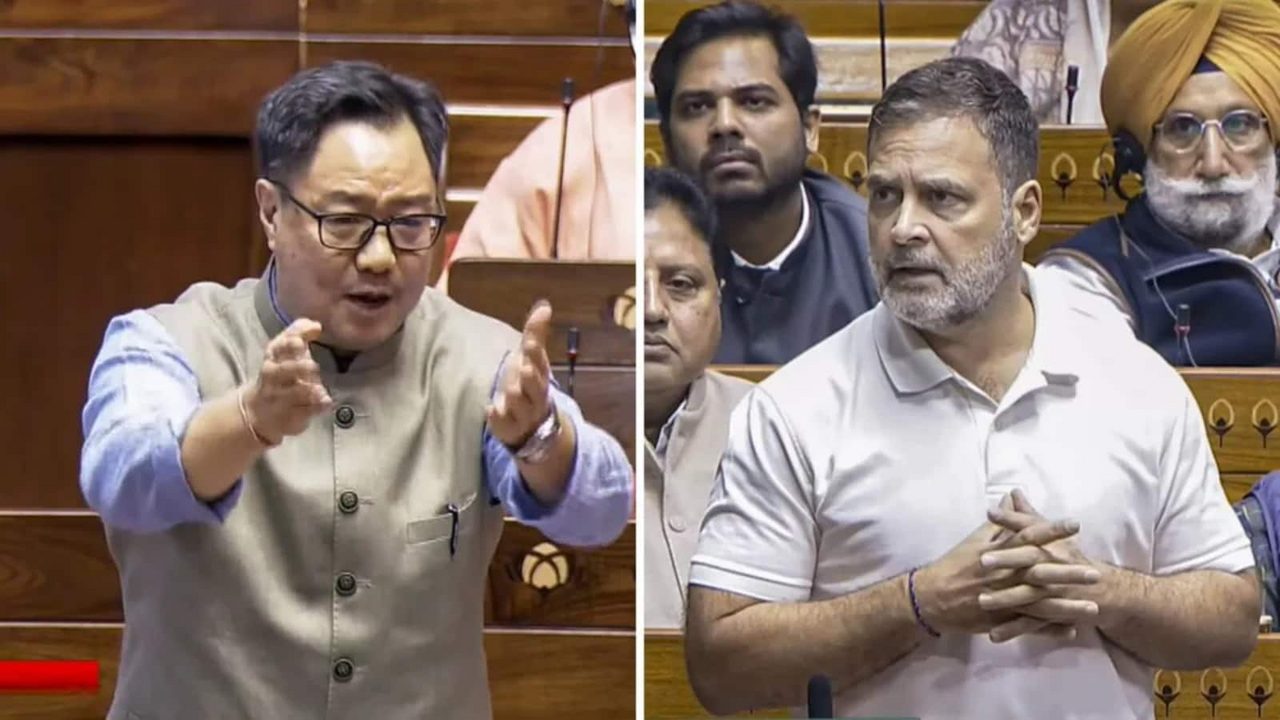
Union Minister Kiren Rijiju launched a sharp verbal attack on the political opposition during recent public remarks, firmly stating that India cannot be compared to nations like Bangladesh or France regarding political stability and governance models. Addressing ongoing discussions about potential political upheavals, the senior leader emphasized that any talk of unconstitutional regime change has no place in the world’s largest democracy. His comments come amid heightened political friction in the capital, where ruling alliance figures have increasingly accused rival parties of attempting to instigate civil unrest and street protests to subvert the established electoral mandate.
News Update latest full details
Elaborating on the administration’s stance, the minister argued that certain politicians have colluded to incite youth and spread violence on city streets, undermining the nation’s democratic fabric. He maintained that true governance transformations and leadership transitions in India occur strictly through transparent ballot box exercises rather than through disruptive street agitations or foreign-inspired movements. This hardline stance highlights the growing tension between the central leadership and opposition factions, who have repeatedly clashed over parliamentary procedures, institutional autonomy, and legislative priorities in recent weeks.
The controversy gains broader context from a series of recent run-ins between the government and opposition figures, including heated exchanges over parliamentary prorogation deadlines, proposed delimitation bills, and crucial legislative quotas. Opposition leaders, such as Congress president Mallikarjun Kharge, have frequently raised concerns regarding executive overreach and the handling of key democratic institutions. At the same time, policy debates surrounding religious endowments, such as Waqf Board matters and heritage protections, have further polarized the political landscape, making fiery rhetoric a daily fixture of national discourse.
Also Read:
- Indian politics: How Raag Darbari Explains
- Parliament Passes Transgender Persons Amendment Bill
- Nageshwar Rao: Becomes Sarvajana Sanatan Party Chief
For citizens across Andhra Pradesh, Telangana, and the rest of the country, this intensifying political standoff has direct implications for how major legislative reforms and governance policies are debated and enacted. When national leaders clash over the fundamental rules of political engagement, it often stalls vital consensus-building efforts on critical socio-economic developments and constituency boundaries. Voters in the southern states closely monitor these high-stakes disputes because the outcomes directly influence federal relations, regional representation, and the overall stability of the democratic framework. Looking ahead, observers will be watching closely to see how both sides navigate upcoming legislative sessions and whether communication channels can remain open for essential policy discussions. The immediate test of political maturity will likely center on upcoming debates regarding delimitation and other major bills, where cooperation between the ruling coalition and opposition parties is urgently required. Public attention will remain focused on whether parliamentary decorum can be restored or if the sharpening rhetoric will lead to further gridlock in the capital.