Why Strong Hybrid Cars Beat Battery EVs in Ownership Savings
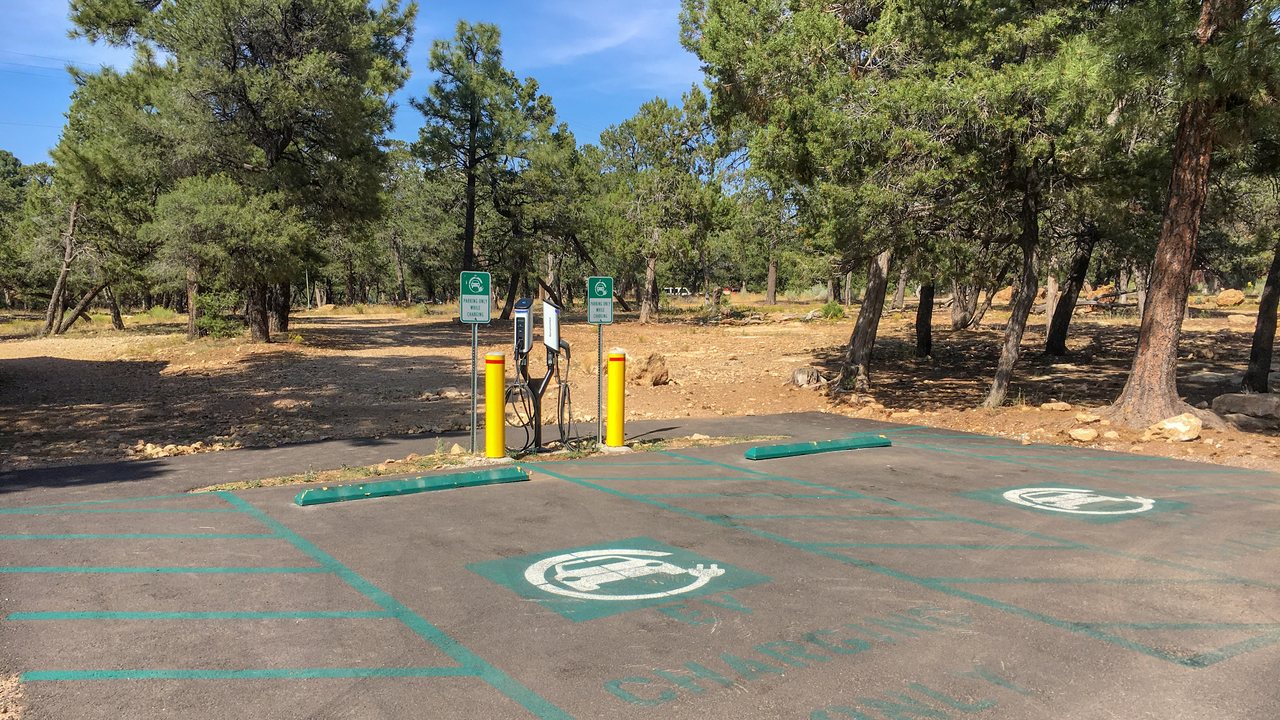
The National Park Foundation, National Park Service, and the Department of Energy partnered with BMW of North America to donate 100 EV charging stations for locations in and near national parks.
GRAND CANYON, Ariz. August 26, 2019 - Electric vehicle (EV) destination travelers can add Grand Canyon National Park to their list. Six EV charging stations are available for visitors to use at Maswik North, Canyon Village Market and Yavapai Lodge. Three additional charging stations were installed for National Park Service (NPS) and partner staff members to use at the park headquarters and Xanterra general offices.
The National Park Foundation, NPS and the U.S. Department of Energy (DOE) partnered with BMW of North America to donate 100 EV charging stations for locations in and near national parks. This project kicked off in April 2017 with the first electric vehicle charging stations installed at Thomas Edison National Historical Park.
"We are excited to offer this service to visitors and are grateful to our supporting partners. This project supports our goals for energy conservation and clean air,'' said Acting Park Superintendent Woody Smeck.
The availability of this option offers more public access for EV destination travel and assists in reducing air pollution in parks and gateway communities. Five additional EV charging stations were installed as part of this program, two in the gateway community of Tusayan at the Grand Hotel and three at the Grand Canyon Railway Hotel in Williams.
"The automobile has long been central to the great American vacation in national parks," said National Park Service Deputy Director P. Daniel Smith. "While our treasured landscapes offer familiar vistas time after time, the automobile has changed greatly, and parks want to meet the needs of our visitors who use electric and plug-in hybrid electric vehicles. Through this joint effort between BMW of North America, the Department of Energy, and the National Park Foundation electric
The debate between strong hybrid electric vehicles and pure battery electric vehicles continues to shift as buyers evaluate long-term financial commitments and state tax policies. While battery-powered models promise zero tailpipe emissions, strong hybrids offer a practical middle ground without the infrastructure anxiety of public charging networks. Recent shifts in state-level road tax structures have added fresh momentum to hybrid adoption, making upfront ownership costs significantly more competitive for daily commuters and long-distance drivers alike.
Financial analysts tracking automotive trends point out that strong hybrids retain a higher resale value compared to early-generation battery EVs, largely due to battery degradation concerns in second-hand markets. Furthermore, hybrid vehicles eliminate the hidden costs associated with home charger installations and high-voltage grid upgrades. With fuel efficiency figures reaching up to thirty kilometers per liter in urban stop-and-go traffic, buyers find that hybrids bypass the heavy operational overhead currently plaguing high-capacity battery cars.
Strong Hybrid Versus Battery Vs
State governments are also reevaluating their incentive frameworks, slowly dialing back massive EV subsidies while maintaining tax concessions for hybrid powertrains that significantly reduce fossil fuel consumption. This policy recalibration benefits buyers who want immediate emission reductions without committing to a purely electric lifestyle. As automakers introduce more hybrid variants into the mid-size segment, the economics favor versatile powertrains that bridge traditional combustion engines and full electrification.
Ultimately, choosing between a strong hybrid and a battery EV depends heavily on daily driving ranges and access to reliable fast-charging infrastructure. For most urban households, hybrids deliver immediate savings on fuel without the range anxiety or charging delays. As automotive markets mature, smart buyers are prioritizing total cost of ownership over pure novelty, cementing the strong hybrid as a pragmatic financial choice for the near future.
Prashanth is the editor of PakkaFilmy. He covers Telangana and Andhra Pradesh politics, Telugu and Indian cinema, sports, technology and useful public-interest news in clear, simple English. Every story is checked against available official information before publishing, as set out in our Editorial Policy. Follow PakkaFilmy on X: https://x.com/pakkafilmy007 | Telegram: https://t.me/pakkafilmytelugu | Instagram: https://instagram.com/pakkafilmy_