India FDI: ASSOCHAM Urges Focus on High-Impact Tech and Job Creation
In a significant push for industrial modernization, industry experts are advocating that India FDI be redirected toward sectors that offer the most substantial long-term benefits for the national economy. The current sentiment suggests that the government should move away from general capital absorption and instead prioritize high-impact investments that focus on three critical pillars: job creation, technological advancement, and export growth. This strategic shift is designed to ensure that international partnerships do more than just increase financial liquidity; they must actively contribute to the strengthening of the domestic manufacturing base and the overall economic framework. By aligning foreign capital with specific developmental goals, the country aims to maximize the utility of every investment dollar received.
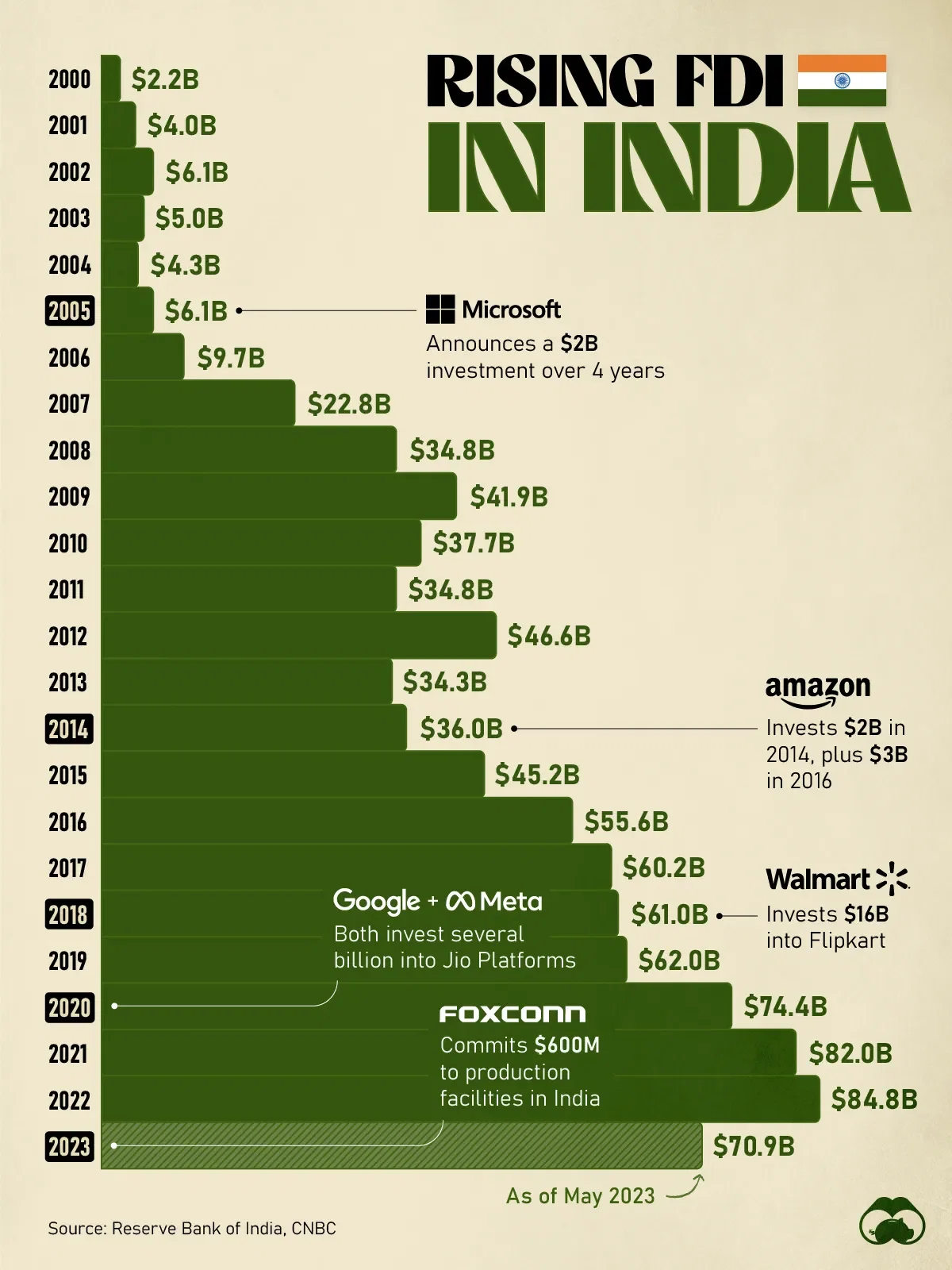
The call for a refined investment strategy comes amidst a period of mixed signals in the financial markets, where record-breaking gross inflows have been recorded alongside notable withdrawals from equity segments. While gross foreign direct investment reached a fifteen-year high of over thirty billion dollars in recent quarterly reports, the market has also witnessed significant capital exits, highlighting a persistent paradox in the investment landscape. Furthermore, new policy frameworks concerning neighboring countries and a rise in outward investment commitments from domestic companies indicate a maturing and increasingly complex economic environment. These background factors underscore the necessity for a more targeted approach to attracting foreign capital that can withstand global market fluctuations and provide a stable foundation for industrial expansion.
To achieve these objectives, the focus is shifting toward deep integration with the existing industrial ecosystem, moving beyond mere financial participation. High-impact investments are characterized by their ability to bring in sophisticated technology and foster local innovation, which in turn leads to the creation of high-quality employment opportunities. Recent instances in the automotive and tech sectors, where international firms have expanded their footprint and committed to massive production increases, illustrate the potential for foreign capital to drive domestic capacity. Experts believe that by incentivizing investments that link local production to global supply chains, the nation can significantly enhance its export capabilities. This approach ensures that the benefits of foreign direct investment are not confined to the balance sheets of multinational corporations but are distributed throughout the local workforce and supply networks.
Looking toward the future, the primary challenge will be converting vast capital commitments into measurable economic impact that supports a trillion-dollar growth trajectory. Policymakers are expected to increasingly favor projects that demonstrate a clear path toward technological self-reliance and the development of a skilled labor force capable of competing on a global stage. As the country seeks to solidify its position as a preferred destination for international business, the emphasis will likely remain on creating a transparent and supportive environment for investors who are willing to commit to long-term national goals. By maintaining a focus on high-impact sectors and export-oriented growth, the nation is set to leverage foreign investment as a key driver for its next phase of industrial evolution and socio-economic prosperity.